
Pastor Phil Andrukaitis, June 11, 2023
The Apostle Paul’s First Letter to the Thessalonians
General Theme: Living Righteously While Waiting Patiently for Jesus to Return
Sermon Title: Promoting Spiritual Health in the Church
Sermon Text: First Thessalonians 5:12-13
Subject: Responsibilities in spiritual relationships
Complement: When biblical responsibilities are fulfilled between the pastor/elders and the church family, peace will reign.
Dominating Idea: Faithful service to one another promotes peace in the church.
Overview & Review
I. Spiritual leaders prove their concern for the church. (1:1a)
II. Spiritual leaders provide care for the church. (1:1bc)
III. Spiritual leaders pray for the church. (1:2-10)
IV. Spiritual leaders pattern a life of loving service unto the church. (2:1 – 3:13)
V. Spiritual leaders prescribe exhortations for the church. (4:1 – 5:28)
A. Exhortations regarding practical sanctification (4:1-12)
B. Exhortations regarding eschatological concerns (4:13 – 5:11)
C. Exhortations regarding ecclesiastical [church] responsibilities (5:12-22)
1. Relating to the Shepherding Leaders (5:12-13) Our Focus Today
2. Relating to the Spiritually Needy (5:14-15)
3. Relating to our Sovereign Savior (5:16-22)
4. Relating to our Spiritual Growth (5:23-28)
But we request of you, brethren, that you appreciate those who diligently labor among you, and have charge over you in the Lord and give you instruction, and that you esteem them very highly in love because of their work. Live at peace with one another.
We urge you, brethren, admonish the unruly, encourage the fainthearted, help the weak, be patient with everyone. See that no one repays another with evil for evil, but always seek after that which is good for one another and for all people. Rejoice always; pray without ceasing; in everything give thanks; for this is God’s will for you in Christ Jesus. Do not quench the Spirit; do not despise prophetic utterances. But examine everything carefully; hold fast to that which is good; abstain from every form of evil.
Now may the God of peace Himself sanctify you entirely; and may your spirit and soul and body be preserved complete, without blame at the coming of our Lord Jesus Christ. Faithful is He Who calls you, and He also will bring it to pass.
Brethren, pray for us. Greet all the brethren with a holy kiss. I adjure you by the Lord to have this letter read to all the brethren. The grace of our Lord Jesus Christ be with you.
(1st Thessalonians 5:12-28 ~ New American Standard ~ NAS)
Introduction
“Jonathan Edwards, pastor of the prestigious Northampton, Massachusetts, Congregational Church, was a leading figure of the eighteenth century First Great Awakening. Religious leaders, like the famous preacher George Whitefield, traveled great distances to meet with him and discuss theological matters.
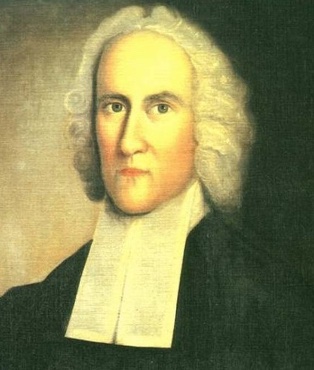
“Yet even a man of Edwards’s credentials wasn’t exempt from criticism. When Edwards sought assurance that those in his congregation had experienced genuine conversion, a group of discontented church members took exception. They launched a slanderous campaign against him that ultimately led to his dismissal from the church he’d made famous. Edwards assumed a modest pastorate in the small frontier town of Stockbridge, Massachusetts. One of the greatest theological minds and most devout pastors in American history was forced out of his church because of malicious detractors.
“Eventually Jonathan Edwards was vindicated before his critics. Some of his most vocal opponents publicly confessed their sinfulness in attacking their godly minister. Ultimately, Princeton University hired Edwards as its president.”
Source: Henry and Richard Blackaby, Spiritual Leadership (Broadman & Holman, 2001)
Transitional Sentences
As we direct our focus to verses 12 and 13, permit me to remind all of us that there are other Scriptural passages which stress the following truths about the Church, the Body of Christ:
1. Jesus is the “Architect” and “Master Builder” of the Church universal; because of this fact, even the gates of hell will never overpower His Church (Matthew 16:18). Jesus Christ is The Lord of the Church and has preeminence over all (Colossians 1:18).
2. There is no other organization or agency in the entire universe greater than the local church. It is part of the Church universal. The significance of the church and the local church is described as being the “pillar and buttress of the truth” (1st Timothy 3:16). Therefore, God has entrusted His Word to redeem and regenerate sinners who are commissioned to testify and give witness to God’s truth, thereby setting sinners free (John 8:32).
3. However, because the Church is made up of “saints who sin,” the Spirit of God is still working in us as we work out our sanctification (not working for their sanctification), even though the “forces of darkness” (Ephesians 6:12) fight dirty to oppress and deceive sinners who have been “born-again.” Sadly though, many of God’s people succumb to Satan’s schemes Thus, Christians turn on one another, spiritually wounding one another.
4. Nevertheless, God the Holy Spirit sovereignly works within the lives of the elect, conforming each of them into the image of Christ; and according to the Godhead’s eternal plan, thwarts Satan’s move. While some local churches end up being spiritually dead, (Revelation 3:1 – Sardis), the gates of hell will never, ever prevail against the Church universal.
5. Therefore, to shepherd a church, a man of God must be called and gifted of God; meeting the biblical qualifications as revealed in Scripture (1st Timothy 3:1-7; 2nd Timothy 2:24-25; Titus 1:5-9). To make clearer the identification of a spiritual leader, the NT employs four terms to describe the same man and his ministry:
- An Elder presbeteros is a title, characterizing a man who is spiritually mature and lives skillfully before God and man. (See Acts 15:2f; 20:17; 1st Timothy 5:17, 19; Titus 1:5; James 5:14; 1st Peter 5:1-4; 2nd John 1; 3rd John 1.)
- An Overseer episkopos [sometimes translated Bishop] is best understood as an office, describing the leader’s spiritual oversight and authority. (See Acts 20:28; Philippians 1:1; 1st Timothy 3:1-2; Titus 1:7.)
- A Pastor poimēn, though often used as a title, really describes the work the man of God does: Feeding and protecting the “flock” the church with Scripture. (See Ephesians 4:11; Matthew 9:36; Mark 6:34.)
- A Leader hegemōn is one who provides spiritual discernment and guidance for the flock. (See Hebrews 13:7, 17, 24.)
As we can see, appointing spiritual leaders in a church is not an easy task. No wonder the church needs the Holy Spirit’s guidance and Holy Scriptures because appointing an unqualified man to this office will bring great harm to God’s people.
With these basic truths in mind, Paul’s exhortations, which are short compressed appeals and commands at the end of his letter to the young Thessalonian church seemingly imply that potential disorderly conduct could erupt in the Thessalonian Church; therefore, Paul was putting his pastoral finger on troubled spots in the life of the congregation.[1]
Therefore, with a gentle spirit, Paul “asks” [not demand] his brothers and sisters in Christ to respond to his exhortations regarding their responsibilities to one another, beginning with the shepherd of the flock.
What are the shepherd’s responsibilities to the flock of God? And what are the responsibilities of the flock to the shepherd? Paul identifies three responsibilities:
a. The Shepherd’s Responsibilities to the Church
- First: to labor diligently among the flock of God
As an Elder who holds the office of Overseer and pastors this church family, along with other Elders, [though their ministry is limited due to their work to support themselves], their spiritual labors are just as intense as the pastor’s labors because of their efforts to support themselves with their jobs.
Yes, this church family, under the Spirit’s direction, has recognized God’s hand upon the shepherds, deacons, and teachers to serve this flock faithfully by laboring diligently.
What does it mean to “labor diligently” kopiaō (Strong’s #2872)? It often refers to manual labor: “toiling,” “striving,” and “struggling.” In other words, Paul is saying that spiritual work is strenuous work.
Sadly, some folks really believe that pastors work only on Sundays and coast for the rest of the week.
While there are some lazy pastors, true pastoral work is hard work which involves studying the Scriptures, praying, planning daily, weekly, monthly, and annual calendars and events, offering counsel for all types of situations, preparing sermons, visiting homes and hospitals, comforting grieving families and dying people, preparing and conducting funerals and weddings, working with colleagues, personally discipling young believers, overseeing all the ministries, and communicating with every leader.
And while all this work is being carried out, there is the constant watch against the devil who is trying to undermine every ministry and destroy God’s work.
Charles Jefferson identified the work of a pastor/shepherd in the following ways: A
pastor/elder/shepherd is a…
- Watchman – looking out for others, overseeing the flock
- Guard – one who protects
- Guide – one who conducts because sheep are not independent travelers
- Physician – one who binds up the wounds and heals
- Savior – one who rescues
- Provider – one who feeds because sheep cannot find or feed themselves
- Lover – one who cares for and is willing to lay down his life for the sheep
It is my heart’s desire that my life and ministry might be a model for others to follow.
While every pastor has his critics, I hope you see the Spirit of Jesus working in me and in the lives of others.
- Second: to preside over the flock of God
To “preside” proistēmi (Strong’s #4291) over the church is to stand before the congregation in order to lead and direct the people. Those who preside “in the Lord” are men who are not “self-appointed” pastors; rather, they are men who are “God-appointed.”
Since anarchy is always wrong, particularly among Christians…any tendency to it…must be rooted out. When believers are united in Christ, respectful submission to Christian leaders is service to the Lord.[2]
Anarchy reigns where there is a vacuum of leadership. Therefore, beware of self-appointed leaders who attempt to fill that vacuum in the church; they are not God-appointed leaders. They seek to serve themselves and rule over others. Check out what Jesus had much to say about the nature of servanthood.
One of my favorite passages on shepherding the flock is 1st Peter 5:1-4. Read it.
Thus, the emphasis of presiding over the flock is not on rank and authority but on the leader’s efforts to help believers gain eternal salvation [John Stott] and ultimately, to have thoroughly prepared Christ’s bride, by adorning “her” [the Church] with beautiful, glorious truths from Scripture, for the great Marriage Feast reserved in heaven [Jonathan Edwards].
- Third: to admonish the flock of God
To “admonish” noutheteō (Strong’s # 3560) is to provide instruction. However, the instruction a believer receives is more than providing “head knowledge.” To admonish is to warn, correct, and even discipline believers in order to help the saints to live holy lives, with the Word of God. Thus, this is nouthetic counseling, counseling people with Scripture.
Obviously, when a pastor or an elder admonishes a believer, the goal is not to provoke or embitter the “would be offender” but to help the believer avoid bad behavior. Unfortunately, a believer may take offense and offer protest against the pastor’s or elder’s admonishment [counsel] or criticism.
While noutheteō is perceived to be a negative word, admonishing a believer is not a harsh ministry but may be best understood as a big brother trying to help the younger brothers avoid bad behavior.
These three areas are the shepherd’s responsibilities to a church. Now, as we shift our focus to the church’s responsibilities to the shepherd, it is important to realize that the Thessalonian church may have been struggling with some of its spiritual leaders. After all, they were a young church, even though their reputation was stellar. Nevertheless, Satan saw an opportunity to create tension between young believers and young spiritual leaders.
b. The Church’s Responsibilities to the Shepherd
John MacArthur rightly observes that shepherding sheep, literally, is hard work. They are often dirty, weak, stubborn, wander away, helpless to help themselves, and bully other weaker sheep. Sometimes, the shepherd’s joy gives way to frustration.
Well, in a similar sense, when God’s people possess an unteachable spirit, they are unwilling to listen to and think through complex issues in God’s Word. When this happens, these “believers” complain among themselves about others, bully and intimidate other Christians, express judgmental statements, and make unreasonable demands upon the pastors and elders. And what do the church leaders do? They agonize over the spiritual health of the saints and the church’s ministries (Hebrews 13:17).
Since we understand the pastor’s role with the church, what attitudes does God expect the church family to have towards their pastor and Elders? Paul identifies three actions:
- First: to be intimately acquainted with their spiritual leaders
Depending upon your version, oida (Strong’s 1492) is translated “know,” “appreciate,” “respect.” Oida means to have the full knowledge by way of experience. In other words, the people of God are personally acquainted and have cultivated an intimate relationship with their pastor and Elders.
Get to know your pastor. Discover how God has impacted his life over the years through various experiences and education. Your pastor wants you to know him. He wants to know you.
Pastor Vail has clearly showed himself to you these many years he has served you as your pastor. And you folks have come to know and love him. Moreover, you have expressed your appreciation to him in many meaningful ways for as the Scripture rightly states, “elders who rule well are to be considered worthy of double honor, especially those who work hard at preaching and teaching” (1st Timothy 5:17).
Truly, he and you are a blessed church family. One day, Pastor Vail, myself, and future pastors of this church will go home to their heavenly reward. Rejoice! And know this, God will always provide you with another shepherd of His choosing.
- Second: to esteem their spiritual leaders, in love, because of their work
To “esteem” hēgeomai (Strong’s #2233) pastors is to hold them in the highest respect because it is due them. Why? Is it for the leadership abilities; breadth of knowledge; the presence of spiritual and personal strengths and few weaknesses; a charismatic personality?
Nay! Godly pastors are to be held in highest esteem…
…because of the Gospel message they preach;
…because they are stewards entrusted to teach Scripture to God’s people; and
…because by virtue of the position/ministry assigned to them.
I would rather remain a pastor all my life than be world ruler. It is a man’s greatest privilege to be an under-shepherd of the Chief Shepherd, Jesus Christ.
My brothers and sisters, respect the office of the pastor for the sake of obedience to the Scripture. However, if you wish to get rid of your pastor, someone has offered the following humorous advice:
- Look your Pastor straight in eye while he is preaching and say “AMEN!” once in a while. He will preach himself to death within a few months.
- Pat your Pastor on the back and brag about his good points. He will soon work himself to death.
- Rededicate your life to Christ and ask your Pastor for a job in the church. He’ll die of heart failure.
- Pray for your Pastor every day. He will soon become so effective that some larger church will take him off your hands.
Only kidding.
To esteem your pastor in love is to choose to perform a selfless service, an act of kindness towards him. Paul was plagued with physical ailments; yet the Galatian church loved and received him (Galatians 4:14-15), even when he rebuked them for the tendency to gravitate towards error and leave the truth of God.
And so, when you esteem your Pastor, esteem him for the work he does and for no other reason. God has called certain men to the pastorate. He has equipped them and taken many of them through the fiery furnaces. In spite of their looks, personality, non-sinful frailties, speak well of them, encourage them, and give your best to them [John MacArthur].
- Third: Be at peace among yourselves.
When a church family is at odds with its Pastor and Elders, with other members, with the leadership’s philosophy of ministry, with the use of spiritual gifts, with others whose personality makeup is different, etc., Scripture says, “Be at peace among yourselves.”
Unfortunately, believers who possess a critical spirit will shred other Christians to pieces – face to face or behind their backs.
Listen, my brothers and sisters, the next time you hear your brother or sister saying unkind things about another Christian, stop them mid-sentence and say, That’s not right. Please don’t say those things.
Conclusion
Paul says, “Be at peace among yourselves.” To be at peace with one another, we need to understand and experience…
…Peace – Jehovah Shalom (Ephesians 2:14-18);
…Peace with God (Romans 5:1) through His shed blood (Colossians 1:20); and
…Peace of God (Philippians 4:7; Colossians 3:15).
Therefore, when we keep our minds fixed on Jesus, He will give us His perfect peace (Isaiah 26:3).
[1] Young, Andrew., Let’s Study 1 & 2 Thessalonians, (Carlisle: Banner of Truth, 2001), p. 98.
[2] Thomas, Robert L., The Expositor’s Bible Commentary, Volume 11, (Grand Rapids: Zondervan Publishing House, 1978), p. 288.
 Bible Believing Baptist Church